- Nouveau
- Epuisé



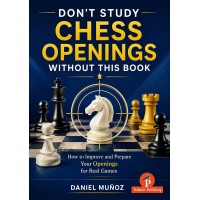
This book is the result of twenty years of teaching chess to students of all ages, distilling practical lessons from a lifetime of experience into one accessible guide. It emphasizes that chess is a game of endless learning, where no player—not even world champions like Magnus Carlsen—can ever “know everything.” A central theme of the book is the importance of study, growth, and humility, highlighting the difference between casual players and serious students of the game. Drawing inspiration from Tigran Petrosian’s belief that true appreciation of chess comes through study, the author underlines the value of deep understanding over surface knowledge.
The Ultimate 1.e4-e5 Primer : A Practical Guide to the Most Fundamental Battle in Chess – Izyaslav Koza & Aleksander Delchev
This book is the result of twenty years of teaching chess to students of all ages, distilling practical lessons from a lifetime of experience into one accessible guide. It emphasizes that chess is a game of endless learning, where no player—not even world champions like Magnus Carlsen—can ever “know everything.”
A central theme of the book is the importance of study, growth, and humility, highlighting the difference between casual players and serious students of the game. Drawing inspiration from Tigran Petrosian’s belief that true appreciation of chess comes through study, the author underlines the value of deep understanding over surface knowledge.
At its core, the book focuses on mistakes and blunders—the true deciding factor in most games. And where better to start than with the classical 1.e4 e5!
In Volume 1 we covered the most frequently played lines after 1.e4 e5!
From beginners to grandmasters, every player makes errors. What separates strong players from the rest is not perfection, but the ability to recognize, punish, and learn from mistakes, ensuring they never lose the same way twice. Through practical examples, including games by top-level players like Alex Stripunsky, the book explores these universal lessons and shows how improvement begins with understanding failure.
Fiche technique
This book is the result of twenty years of teaching chess to students of all ages, distilling practical lessons from a lifetime of experience into one accessible guide. It emphasizes that chess is a game of endless learning, where no player—not even world champions like Magnus Carlsen—can ever “know everything.” A central theme of the book is the importance of study, growth, and humility, highlighting the difference between casual players and serious students of the game. Drawing inspiration from Tigran Petrosian’s belief that true appreciation of chess comes through study, the author underlines the value of deep understanding over surface knowledge.